Botanical Illustrations
Many people probably think about our expansive gardens when they hear of The Huntington’s flora but plants also make up an important part of the art and library collections in the form of botanical illustrations. Beautiful and educational, these colorful depictions of plants ranging from the common to the exotic are rendered in such incredible details that you can almost feel the leaf textures. Studying these illustrations can help us perceive the natural world in the same inspiring way their creators once did and allow us to better appreciate the gardens we see.
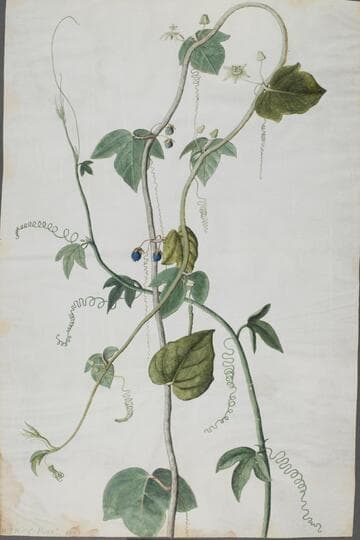
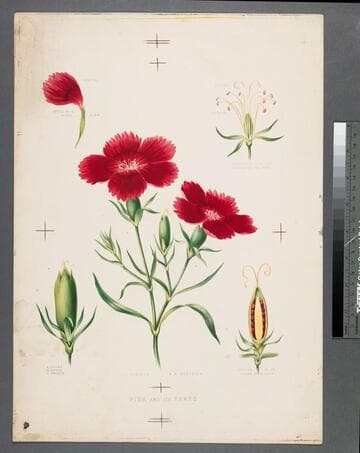
Pink and its parts
Visual Materials
Image of a dianthus flower with four surrounding diagrams showing parts of the flower, including captions to label the pistils, stamens, ovary, and other parts.
priJLC_PRG_002119
![[Proof sheet for Prang's natural history series: shapes of leaves, I and shapes of leaves, II.]](/_next/image?url=https%3A%2F%2Frail.huntington.org%2FIIIF3%2FImage%2F22APN4EQVM57%2Ffull%2F%5E360%2C%2F0%2Fdefault.jpg&w=750&q=75)
[Proof sheet for Prang's natural history series: shapes of leaves, I and shapes of leaves, II.]
Visual Materials
Image of a proof sheet of 24 album cards of leaf shapes from Prang's Natural History Series; issued in two sets of 12 cards; each card lists the common and botanical name for each kind of leaf along with the name of the specific plant illustrated.
priJLC_PRG_002122
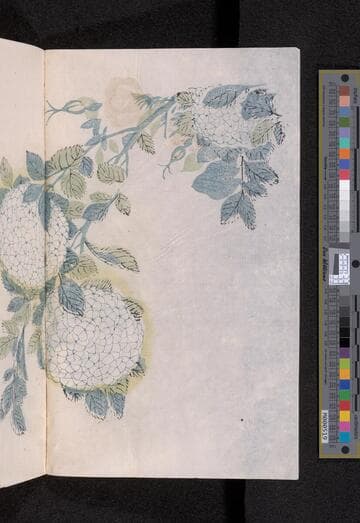
芥子園畫譜. Pt. 3
Rare Books
Part 3 of a four part set of woodblock-printed books; this part divided into four volumes. Presents the methods and principles of Chinese painting. The books cover a wide range of topics from trees, rocks, landscapes, flowers, plants, animals, insects, human figures and architectural designs. The preparation and application of colors on paper are also discussed. The mustard seed manual was highly influencial amongst artists and historians and became widely available throughout East Asia as evidenced by its prolific edition history through the 18th to 20th centuries. It is also an example of early Chinese multi-color woodblock printing.
653643
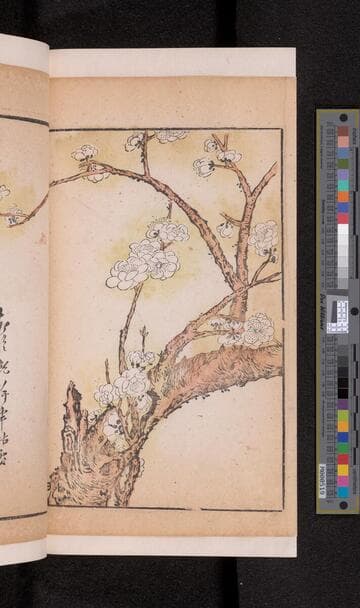
芥子園畫譜. Pt. 2
Rare Books
Part 2 of a four part set of woodblock-printed books; this part divided into four volumes. Presents the methods and principles of Chinese painting. The books cover a wide range of topics from trees, rocks, landscapes, flowers, plants, animals, insects, human figures and architectural designs. The preparation and application of colors on paper are also discussed. The mustard seed manual was highly influencial amongst artists and historians and became widely available throughout East Asia as evidenced by its prolific edition history through the 18th to 20th centuries. It is also an example of early Chinese multi-color woodblock printing.
653643
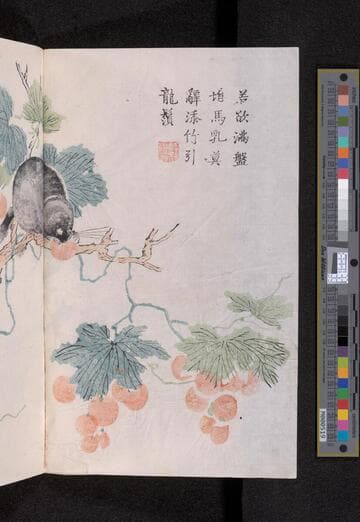
芥子園畫譜. Pt. 3
Rare Books
Part 3 of a four part set of woodblock-printed books; this part divided into four volumes. Presents the methods and principles of Chinese painting. The books cover a wide range of topics from trees, rocks, landscapes, flowers, plants, animals, insects, human figures and architectural designs. The preparation and application of colors on paper are also discussed. The mustard seed manual was highly influencial amongst artists and historians and became widely available throughout East Asia as evidenced by its prolific edition history through the 18th to 20th centuries. It is also an example of early Chinese multi-color woodblock printing.
653643
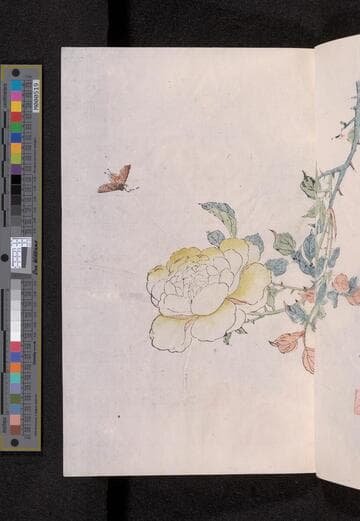
芥子園畫譜. Pt. 3
Rare Books
Part 3 of a four part set of woodblock-printed books; this part divided into four volumes. Presents the methods and principles of Chinese painting. The books cover a wide range of topics from trees, rocks, landscapes, flowers, plants, animals, insects, human figures and architectural designs. The preparation and application of colors on paper are also discussed. The mustard seed manual was highly influencial amongst artists and historians and became widely available throughout East Asia as evidenced by its prolific edition history through the 18th to 20th centuries. It is also an example of early Chinese multi-color woodblock printing.
653643
![Natural y General Hystoria de las Indias, 1539-1548. [volume 2]](/_next/image?url=https%3A%2F%2Frail.huntington.org%2FIIIF3%2FImage%2F22APN4UVRT9%2Ffull%2F%5E360%2C%2F0%2Fdefault.jpg&w=750&q=75)
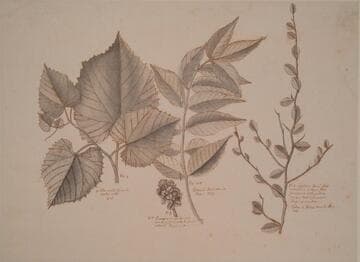
Natural y General Hystoria de las Indias, 1539-1548. [volume 2]
Manuscripts
Paper; ff. i (contemporary) + 107 + i (contemporary); modern foliation in vol. 2 runs 11-117 since ff. 1-10, formerly bound with this volume, were removed in 1976 and catalogued as HM 37542. Vol. 2: 1¹² 2¹²(-11, 12) 3¹² 4²²(-22) 5⁴ 6-7¹² 8¹²(plus bifolium between 1 and 2) 9¹⁰. 290 x 210 (220-232 x 105-110) mm. The lower margin of the last 8 leaves are completely cut away. Written in the hand of the author. Catchwords enclosed in brown ink scrolls in the middle or right lower margins. Leaf signatures in roman numerals in the middle of the lower margin; quire and leaf signatures in a later hand in letters and arabic numerals, frequently including the seventh leaf of a quire, in the right lower margin close under the text. 32-38 long lines; vertical bounding lines ruled in dry point. The manuscript was written probably in Santo Domingo between 1539-46 and completed in Spain in 1546-48: the dates given in the text are March 1539, in Book IV, chap. 7 and 1548 in the prologue of Book VI. Illustrated with 24 pen and ink drawings by the author, a few shaded in black lead. Marginal notes in 3 hands: i, the author's corrections, additions and directions to the printer; ii, note on f. 49 of vol. 1 made after 1580; iii, pencilled notes in English in vol. 2 with the book numbers, probably made by a bookseller. Contents: [Gonzalo Fernández de Oviedo y Valdés] Historia general y natural de las Indias. Books IV, VII, IX, XI, XXXII, and XXXVII]: [f. 11, Prologue:] Pues que es ya tiempo se de conclusion A las cosas de la governacion ... [f. 11v, Text:] Capitulo primero ... Dixosse en el libro procedente ...Y esto baste quanto a este breve libro del numero xxxvi hasta que el tiempo nos avise de otras cosas que en el se acresçienten.
mssHM 177